
Het Wilde Westen Jazz Program (HWWJP)
HWWJP's vision is to foster the growth and preserve the cultural heritage of Jazz music in Utrecht, particularly among youth. The goal is to educate students on jazz performance, jazz improvisation, and jazz history. We live in an age where barriers are constantly encouraged to be broken; however, in the process of doing so, we often leave behind parts of ourselves and the cultural heritage that help us understand who we are.
What is a tree without its roots?
The teachers.
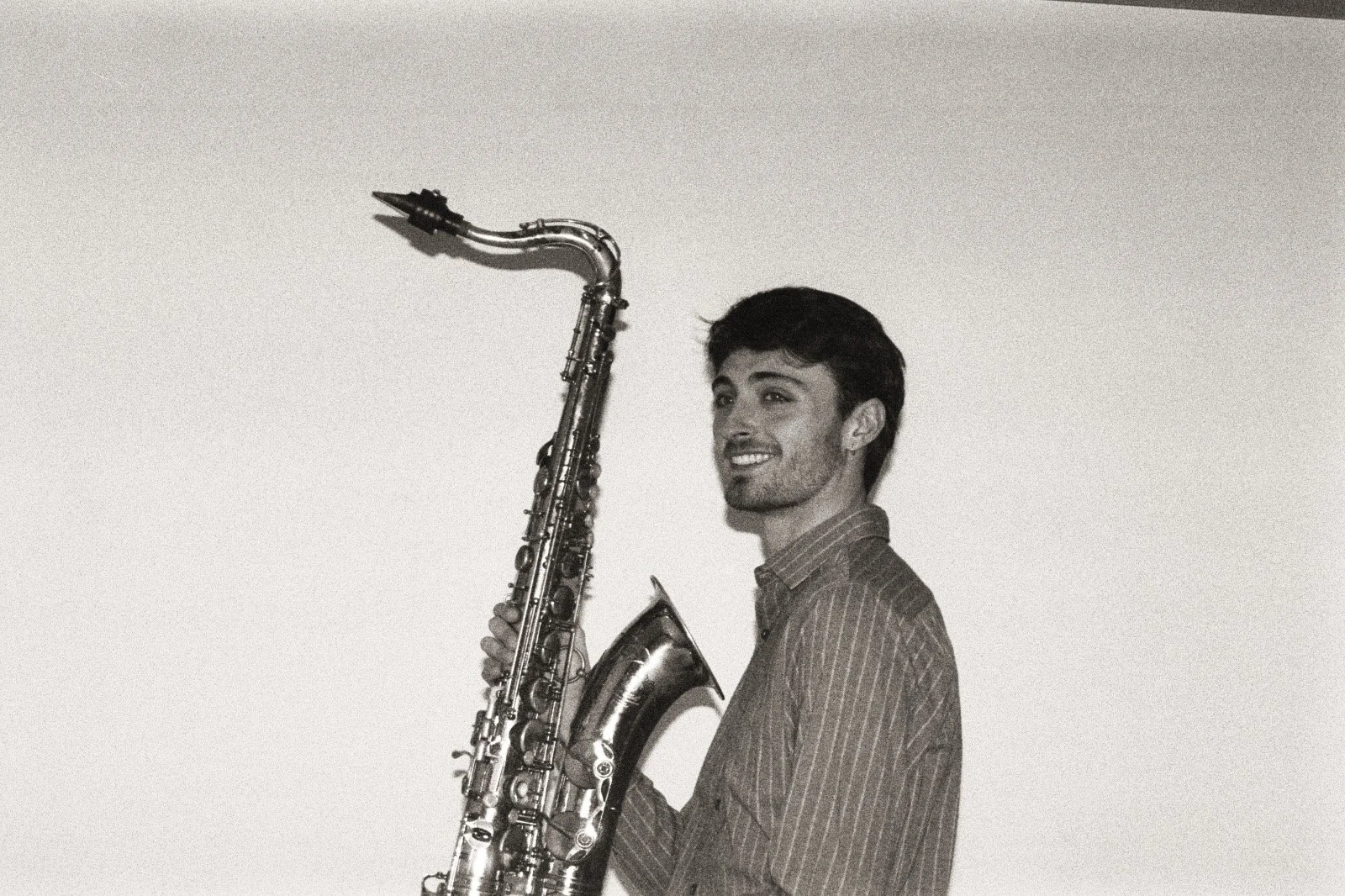
Isaac Turner
Saxophonist, composer & band coachIsaac Turner (2001) is a saxophonist, composer, and bandleader whose music is driven by deep cultural purpose. Born in Atlanta, Georgia, he is driven by his roots in the Deep American South. Isaac is known for his distinctive vintage sound, commanding sense of melody and narrative, and improvisation. Graduating from Utrechts Conservatorium, he has emerged as an up-and-coming saxophonist, equally compelling as a sideman, ensemble leader, and collaborator.
He began studying jazz with Atlanta-based saxophonist Will Scruggs at thirteen. Throughout middle & high school, he spent every Monday evening with Georgia State University’s prestigious Rialto Youth Jazz Orchestra (RYJO) and combos (organized/conducted by Dr. Gordon Vernick with notable alumni Morgan Guerin, Kevin Oliver Jr., and Curtis Oluwami) and frequently played at the Atlanta Jazz Festival. During his conservatory studies in the Netherlands, he actively participated in projects such as the Jong Metropole and various Big Band projects organized by his school.
Isaac draws influence from legends like Dexter Gordon, Stan Getz, and Sonny Rollins. Turner is particularly fascinated by the bebop and post-bop era. These elements continues to form the foundation of his musical approach. He is rooted in the American musical tradition; Turner approaches jazz as a living lineage — one rooted in the blues, spirituals, and the broader Black American art form.

Sacha Palies is innovator, componist, docent en improvisator, en beweegt zich als contrabassist op het snijvlak van innovatieve jazz, schurende klassieke muziek en alternatieve pop. Als muzikant zoekt hij voortdurend de grenzen van genres op, buigt hij muzikale werelden naar elkaar toe en creëert hij zijn eigen regels. Van explosieve rock tot avontuurlijke, grensverleggende jazz: zijn werk kenmerkt zich door een eigenzinnige benadering, een drang naar vernieuwing en een fascinatie voor muzikale contrasten.
Met de experimentele rockband SULTAN. stond hij op podia als de Melkweg, Paradiso en TivoliVredenburg. Daarnaast is hij een graag geziene gast in Cloud Nine, waar hij met uiteenlopende jazzprojecten optreedt. Hij speelde onder ande met jazzmusici Jasper Blom, Nils Petter Molvær en Tyn Wybenga, en trad met Het Muziek op tijdens het Gaudeamus Festival. Met de instrumentale band Bistro verkent hij bovendien de wereld van jazzfunk, groove en improvisatie. In al zijn projecten zoekt Palies naar nieuwe manieren om uiteenlopende muzikale werelden met elkaar te laten botsen en versmelten.
Bassist, composer, & band coachSacha Palies
About the program
Curriculum & Pedagogical Approach
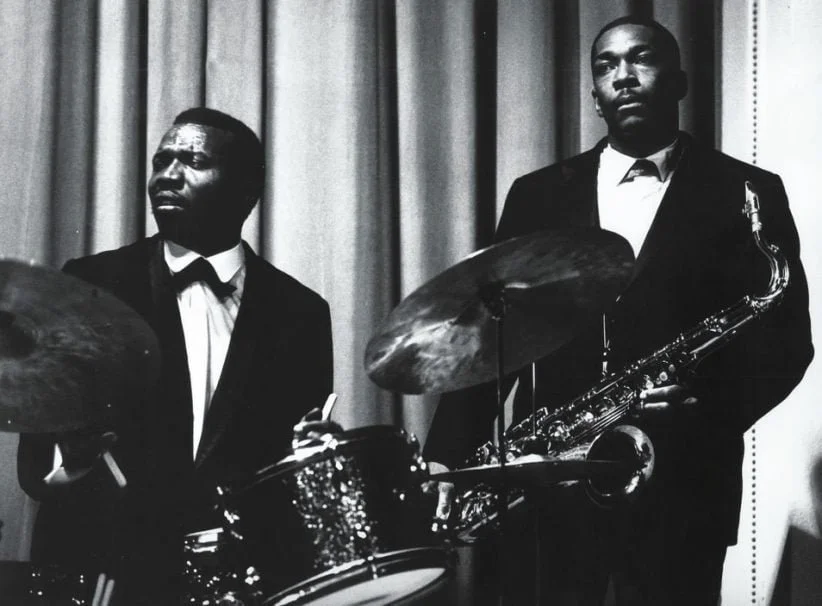
Jazz music is a tradition historically passed on aurally; therefore, the student will be encouraged to learn pieces/songs using their ears and instruments.
The pieces chosen will come from the jazz canon (“jazz” in the broad sense of the word): swing era (think Duke Ellington, Benny Goodman, Count Basie, etc.), Bebop, Post-bop, Bossa Nova (Brazil), Hard Bop, and the various other styles that have emerged over the 20th century contributing to this music. Improvisation is highly encouraged and an important part of this program.
Students will also be educated on the use of scales: Dorian, Mixolydian, and major/ionian for a ii-V-I pattern. This is because one can relate these 3 scales to a normal major scale (as well as blues, pentatonic, etc.) and use them for vocabulary and rhythm in a solo. Students will also learn about style and time feel (swinging vs. straight eighths) and the phrasing used in this music. For bass, more specifically, we will explore walking, Latin, and bossa nova bass playing.

Philosophy of Playing
Most importantly, the lessons will be a safe space for students to make mistakes – in fact, students are encouraged to make mistakes. Every student, regardless of level, skill, age, or instrument, will be encouraged to improvise.
“Big Ears”: Musicians must play with "big ears"—meaning they are listening more to their peers than to themselves. They must learn the physical and sonic boundaries of their specific roles (e.g., keeping time, comping chords, or holding down the bass line).
Young players often view jazz as overly complex; therefore, a successful pedagogy breaks down this barrier through shared vocabulary, emphasizing that finding one's own voice happens through tradition (aka: learning the canon of jazz).
Imitation: Learning foundational jazz standards (such as "Autumn Leaves" or "Blue Bossa") allows students to copy thinking frames and understand how the masters approached melody and rhythm.
Assimilation: Repetition of these musical structures helps students internalize the shared language of jazz.
Innovation: Once internalized, students can confidently sit in on any jam session, using the shared standards to communicate and spontaneously invent their own ideas.
Pricing and dates (autumn 2026)
Price: €185
Start date: October 31st
The program runs for 10 weeks, ending with the presentation/concert date in the 10th week.
October: 31st
November: 6th, 14th, 21st,
December: 4th, 11th, 18th,
January: 9th, 16th (potential concert date)
Location & Contact
Everard Meijsterlaan 1B,
3533 CK Utrecht
Het Wilde Westen
Have any questions? Don’t hesitate to ask.